Taking Custom Design to New Levels
PROUD TO BE PART OF THE BRIN FAMILY OF COMPANIES

OTHER BRIN LOCATIONS
Brin Glass Company | Minneapolis, MN
St. Germain’s Glass | Duluth, MN
Heartland Glass | Waite Park, MN

Why Buy a Humanoid Robot for Your Business?
A humanoid robot can move through spaces designed for people, from hotel corridors to warehouse aisles. That familiar shape may help businesses automate tasks without rebuilding every workplace. It can greet visitors, carry lightweight items, inspect shelves, or support repetitive training exercises. Yet appearance alone does not create business value. The real question is whether the robot solves a measurable operational problem.
Companies should examine labor costs, task frequency, safety risks, and integration requirements before making a purchase. A useful pilot might place one humanoid robot beside a reception desk for eight weeks. Managers can track response times, visitor satisfaction, maintenance hours, and missed interactions. Clear records matter more than impressive demonstrations. Independent testing, supplier documentation, and transparent performance limits can also support responsible decisions.
The technology remains immature.
Some models struggle with uneven floors, crowded rooms, weak lighting, or unexpected instructions. Battery changes can interrupt busy shifts. Staff may need training, and customers may prefer human assistance in sensitive situations. These limitations deserve attention, not marketing language. A careful business leader should compare humanoid robots with simpler options, including software, fixed automation, or redesigned workflows. The strongest purchase case appears when flexibility, safety, and consistent performance outweigh the robot’s cost. Results may differ sharply across industries, so measured experience should guide expansion rather than excitement.
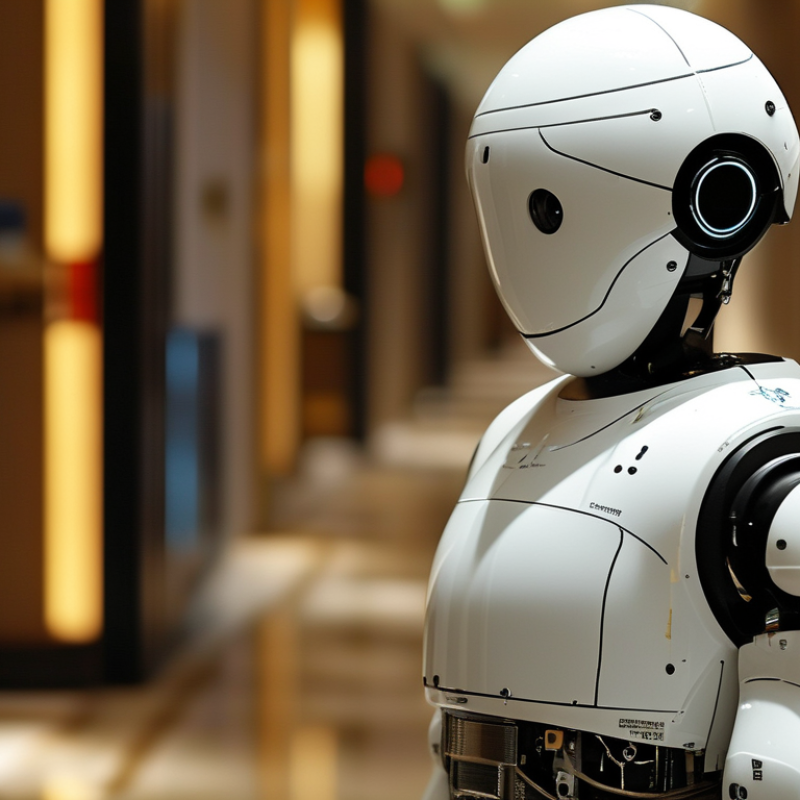
A humanoid robot is a machine designed around the human body. It usually has a head, torso, two arms, and two legs. Cameras, microphones, force sensors, and software help it perceive nearby objects. Electric actuators create movement in its joints. Artificial intelligence helps it interpret instructions and choose actions.
The design matters because many workplaces already use human tools, shelves, stairs, and workstations. A humanoid form may operate in these spaces without major rebuilding. However, human-like appearance does not guarantee human-like ability. The robot may struggle with slippery packaging, uneven floors, or a crowded production line. That distinction matters.
The International Federation of Robotics reported 4.28 million industrial robots operating worldwide in 2023, with 541,302 new units installed that year in World Robotics 2024. These figures describe industrial robots broadly, not humanoid machines. They show a growing automation foundation, but not proof that every business needs a bipedal system. Goldman Sachs Research estimated that the humanoid robot market could reach 38 billion dollars by 2035. This remains a forecast, not a confirmed outcome.
For a business buyer, the practical question is simple: what can the robot safely repeat, measure, and improve? A useful evaluation includes walking stability, lifting limits, battery duration, maintenance access, and human supervision. Early demonstrations can look impressive. Real value appears during ordinary shifts. Even then, adoption may expose unexpected training costs and workflow delays. Careful pilots are wiser than confident assumptions.
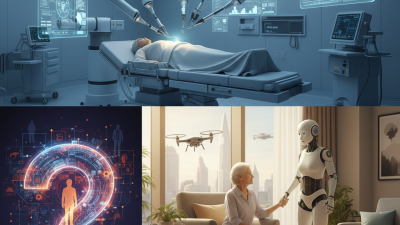
A humanoid robot can support operations where work is repetitive, physical, or spread across long shifts. In a warehouse, it may carry small containers, scan shelves, and deliver tools between workstations. In a hotel or office, it can guide visitors, answer routine questions, and report supply shortages. Its human-like shape helps it use stairs, handles, and existing work areas without rebuilding every space. This flexibility can reduce setup costs. But results depend on the environment.
Reliable deployment begins with a narrow task. Managers should measure walking time, error rates, response speed, and maintenance hours before expanding use. A robot connected to approved scheduling and inventory systems can update records in real time. Staff still need clear handoff rules, emergency stops, and training. Human supervision remains essential when conditions change. That matters.
The strongest business case often appears during difficult shifts. A robot can move materials at night, inspect repetitive locations, or support workers during demand peaks. Employees may then spend more time solving customer problems and handling judgment-based work. However, a humanoid robot is not automatically cheaper or better. Batteries need charging, software needs updates, and unfamiliar movements may slow a team at first. Early trials can expose these weaknesses. That is useful, even when the pilot disappoints. Managers should review worker feedback, safety records, and total operating cost before making a larger commitment.
Which Business Tasks Are Suitable for Humanoid Robots?
Humanoid robots fit tasks built around human spaces, tools, and routines. The 2024 World Robotics report recorded 541,302 industrial robot installations worldwide in 2023. That figure excludes humanoid systems. Still, it shows strong demand for repetitive automation. The World Economic Forum’s Future of Jobs Report 2025 projects that 22% of today’s jobs may change by 2030. Businesses should therefore assess tasks, not job titles.
Suitable work includes moving totes between warehouse zones, scanning shelves, sorting parcels, and checking visible product defects. A robot can walk through narrow aisles, lift standard containers, and report missing stock. In a hotel, it might deliver towels along predictable routes. In light manufacturing, it could load fixtures, repeat inspection steps, or collect measurements. These tasks have clear outputs, stable safety boundaries, and measurable cycle times. Keep humans nearby.
The less suitable tasks involve judgment, emotional care, or unpredictable environments. A crowded loading bay can confuse navigation. A wet floor may reduce balance. A soft package might be dropped. Pilot teams should measure recovery time, error rates, energy use, and worker acceptance, rather than impressive demonstrations. The International Federation of Robotics data concerns industrial robots, not humanoid reliability. That distinction matters. Early deployments may need frequent supervision, and the business case can weaken when training, maintenance, and safety redesign are included.
A humanoid robot may improve productivity, but its price extends beyond the purchase contract. Businesses should budget for installation, software updates, staff training, insurance, and facility changes. A single unit can also require a dedicated charging area and technical supervision. These expenses often appear after approval. That is risky.
Operational reliability needs careful testing. Dust, uneven floors, narrow aisles, and changing light can affect performance. A robot may complete a demonstration smoothly, then struggle during a busy shift. Downtime can interrupt orders, disappoint customers, or increase labor pressure. Safety is another concern, especially when people work nearby. Clear operating zones, emergency controls, maintenance records, and regular risk assessments are essential. Data handling also matters if cameras or microphones collect workplace information. We should not assume every task can be automated safely. That assumption is expensive.
Tips: Begin with one measurable task, such as moving standard containers between fixed locations. Calculate the full cost over three years, including repairs and training. Test the robot during normal and difficult working conditions. Ask who responds when the system fails. Keep a manual backup process. Review results with employees, because practical experience may reveal problems that technical trials miss. A small pilot is not failure. It is evidence.
Buying a humanoid robot should begin with a workflow, not a showroom demonstration. Map repetitive tasks, lifting limits, walking distances, and handover points. The International Federation of Robotics reported 4.28 million industrial robots operating worldwide in 2023. That figure shows automation maturity, but humanoid systems still require careful validation. Ask whether human-shaped movement adds value over simpler equipment.
Measure one narrow pilot. Track completed tasks per hour, intervention frequency, recovery time, damage rates, energy use, and total labor impact. McKinsey’s State of AI 2024 survey found that 78% of organizations use AI in at least one business function. Yet adoption does not guarantee operational readiness. A robot may perform well in controlled tests and struggle beside a crowded loading area. That gap matters.
Build the evaluation with operators, safety specialists, and integration engineers. Test lighting changes, awkward objects, network interruptions, and unexpected human movement. Review safeguards against ISO 10218 and ISO/TS 15066 principles, while checking local requirements. Protect recorded video and worker data from unnecessary access. My own decision rule would require a clear fallback mode. It should stop safely, explain the failure, and allow quick human control. A failed pilot is useful evidence. Pretending otherwise creates expensive confidence. Use a staged contract, transparent maintenance costs, and an exit condition when reliability stays below the agreed threshold.
| Evaluation Dimension | What to Measure | Relevant Data or Formula | Evidence Required | Adoption Decision |
|---|---|---|---|---|
| Business Use-Case Fit | Whether the task benefits from a human-scale body, two-legged movement, or human-compatible tools and workspaces. | Prioritize repetitive, physically demanding, hazardous, or ergonomically unsuitable tasks. A humanoid form is less justified when a fixed machine or wheeled robot can perform the task more simply. | Task map, workstation measurements, process video, safety assessment, and comparison with non-humanoid automation. | Proceed only when the humanoid design solves a specific access, tool-use, or workspace constraint. |
| Task Completion | Successful completion rate, intervention rate, cycle time, and error rate. | Completion Rate = Successful Tasks ÷ Total Task Attempts × 100. Record both fully autonomous cycles and cycles requiring human intervention. | Time-stamped pilot logs covering normal conditions, variation, interruptions, and recovery from errors. | Scale only if performance is stable across representative shifts and not limited to demonstrations. |
| Productivity Impact | Useful operating time, completed units per hour, and effect on the human workforce. | Net Productivity Gain = Robot-Enabled Output − Baseline Output. Include charging, setup, maintenance, supervision, and recovery time. | Baseline process data and a controlled comparison using the same quality and safety requirements. | Adopt only when the robot creates measurable net capacity rather than merely shifting work to supervisors. |
| Total Cost of Ownership | Purchase or lease cost, integration, software, training, service, spare parts, energy, insurance, and site modifications. | TCO = Acquisition Cost + Integration + Operating Cost + Maintenance + Training + Downtime Cost − Residual Value. | A written commercial proposal, service terms, warranty conditions, replacement-part lead times, and implementation estimates. | Reject proposals that omit integration, support, software, or downtime costs. |
| Financial Return | Payback period, annual net benefit, and sensitivity to utilization and labor availability. | Payback Period = Initial Investment ÷ Annual Net Cash Benefit. Annual Net Cash Benefit should include labor redeployment, avoided injury exposure, output gains, and all operating costs. | Finance-approved model with conservative, expected, and high-utilization scenarios. | Approve only when the business case remains acceptable under realistic utilization and downtime assumptions. |
| Safety and Compliance | Collision risk, fall risk, pinch points, emergency stopping, safe operating zones, and interaction with workers. | Industrial robot risk assessments commonly reference ISO 10218. Human-robot collaborative applications may also require consideration of ISO/TS 15066, alongside applicable local laws and workplace rules. | Third-party or qualified internal risk assessment, safety-function documentation, test records, and operating procedures. | Do not deploy in shared work areas until hazards, protective measures, and emergency procedures are validated. |
| Payload and Reach | Maximum safe payload, reach envelope, grasp reliability, and ability to handle the actual objects used at the site. | Use the manufacturer’s rated payload and reach for the specific configuration. Payload capacity can decrease with reach, speed, acceleration, and object shape. | On-site trials using real parts, packaging, tools, shelf heights, and required cycle times. | Proceed only when performance is demonstrated with production materials rather than laboratory substitutes. |
| Mobility and Site Compatibility | Ability to navigate floors, ramps, thresholds, stairs, narrow aisles, doors, and changing layouts. | Measure navigation success, travel time, recovery from blocked routes, and fall or near-fall events. Bipedal mobility is environment-dependent and requires site-specific validation. | Digital site map, physical route trials, lighting tests, floor-condition checks, and obstruction scenarios. | Use only in areas where the robot can operate safely and consistently without excessive route supervision. |
| Energy and Availability | Battery operating time, charging time, charging method, uptime, and recovery after faults. | Availability = Scheduled Operating Time − Unplanned Downtime ÷ Scheduled Operating Time × 100. Report the effect of payload, speed, temperature, and task mix on battery life. | Multi-shift endurance test, charging records, fault logs, and maintenance response data. | Add spare units or battery capacity only when the operational model justifies the additional cost. |
| Integration and Data | Compatibility with work instructions, warehouse or manufacturing systems, access controls, networks, and reporting tools. | Evaluate available APIs, data export, offline operation, network dependency, cybersecurity controls, and ownership of operational data. | Architecture review, API documentation, cybersecurity questionnaire, data-processing terms, and integration prototype. | Avoid deployment when essential operations depend on undocumented interfaces or uncontrolled data access. |
| Workforce Adoption | Training time, operator workload, acceptance, role changes, and availability of maintenance skills. | Track training hours, support requests, intervention causes, and employee feedback before and after the pilot. | Training records, structured interviews, anonymous surveys, and observed operating procedures. | Scale only with clear ownership, documented procedures, and trained personnel on every operating shift. |
| Pilot Structure | Scope, duration, success criteria, fallback plan, and comparison with the existing process. | A pilot should include a defined baseline, representative task variation, documented failure modes, and a go/no-go review before expansion. | Pilot charter, baseline measurements, daily performance logs, incident reports, and final cost-benefit analysis. | Move from pilot to limited production only when technical, financial, safety, and workforce criteria are all satisfied. |
| Scale-Up Readiness | Repeatability across sites, shifts, operators, products, and environmental conditions. | Compare pilot results with production requirements and document which assumptions change when the number of units increases. | Site-readiness checklist, standardized work instructions, support-capacity plan, and updated financial model. | Scale in controlled stages, with performance, safety, and cost reviews after each stage. |
Note: Humanoid robot capabilities vary substantially by configuration, software, environment, and task. All performance, safety, and financial assumptions should be validated through an on-site pilot using production-representative conditions.
Taking Custom Design to New Levels

Brin Glass Company | Minneapolis, MN
St. Germain’s Glass | Duluth, MN
Heartland Glass | Waite Park, MN

Fabricator
Inside Sales and Client Support Manager
Glass Handler – 1st Shift