Taking Custom Design to New Levels
PROUD TO BE PART OF THE BRIN FAMILY OF COMPANIES

OTHER BRIN LOCATIONS
Brin Glass Company | Minneapolis, MN
St. Germain’s Glass | Duluth, MN
Heartland Glass | Waite Park, MN

Choosing the right Flat Laminating Machine in 2026 requires more than comparing prices and polished product photos. A reliable machine should match your materials, working volume, finish requirements, and available floor space. Operators commonly assess roller width, heating control, pressure adjustment, warm-up time, and maximum film thickness. Small details matter. A poorly positioned control panel can slow production every day.
This buying guide examines practical specifications through the lens of real workshop use. It considers whether a machine handles posters, photographs, menus, labels, boards, or short-run commercial graphics consistently. Temperature stability is especially important. Uneven heat may create bubbles, silvering, wrinkles, or weak edges. A test sample often reveals more than a sales brochure. Keep records of film type, substrate, speed, and temperature during testing.
Not every recommendation will suit every buyer. A compact model may save space but limit future orders. A faster machine may demand better operator training and stronger ventilation. Even experienced users can overlook maintenance access, replacement rollers, or local technical support. That is a mistake worth acknowledging. Manufacturer manuals, documented specifications, warranty terms, and independent user feedback should support the final decision. Buyers should also confirm electrical requirements and follow applicable workplace safety guidance. The best Flat Laminating Machine is not necessarily the most powerful model. It is the one that delivers repeatable results, manageable operating costs, and dependable support for your actual workflow. Careful comparison prevents expensive surprises later.
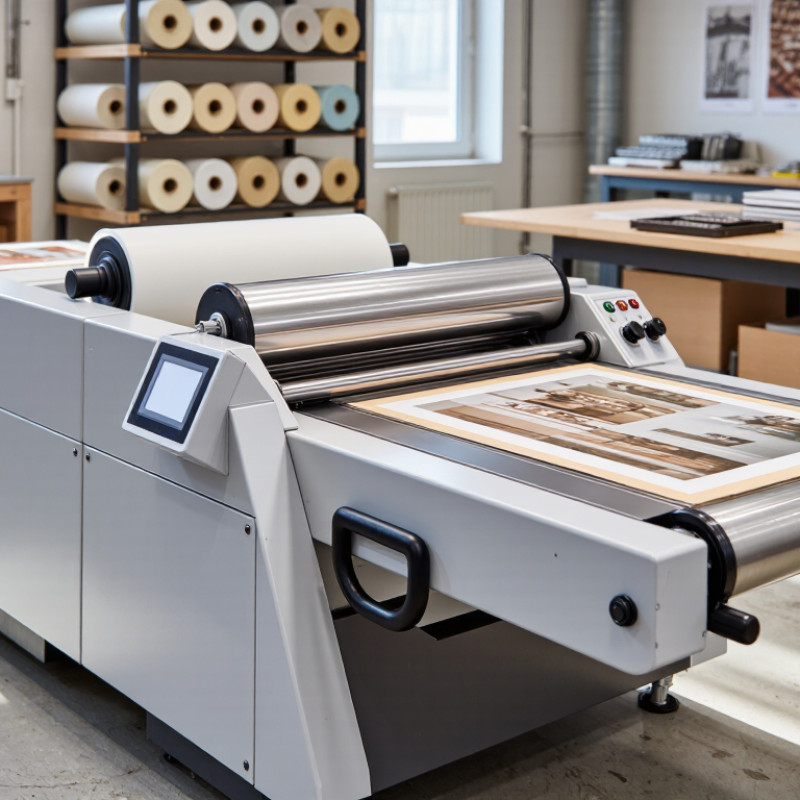
Choosing the best flat laminating machine in 2026 starts with the material, not the machine’s appearance. Cold laminators use pressure-sensitive adhesive films and require no heat. They suit heat-sensitive prints, photographs, and some coated papers. The finish is clean, but trapped air can create bubbles if the operator feeds material too quickly.
Hot laminators soften adhesive through heated rollers. They often protect menus, signs, and instructional sheets with durable, sealed edges. Thermal systems are similar, but their results depend strongly on temperature, speed, and film thickness. Too much heat may curl thin paper. Too little heat can leave weak bonding. Pressure-sensitive systems provide a practical option for delicate media, although the adhesive may attract dust during handling. I have found that real workshop conditions matter more than catalog specifications. Humidity, operator skill, and daily workload can change the result.
Tips: Test one small sheet before production. Measure the widest material you process regularly. Check warm-up time, roller pressure, and emergency controls. Keep the rollers clean. A neglected roller can mark every sheet. Choose adjustable temperature and speed settings when materials vary. Do not assume faster is better. A slower pass often improves alignment and edge sealing. Record successful settings for repeat jobs, but review them when film or paper changes.
2026 Best Flat Laminating Machine Buying Guide
A flat laminating machine should match your film, substrate, and daily production rhythm. The key specifications are temperature, speed, and pressure. A 60–180°C temperature range supports common thermal films and heat-sensitive sheets. Lower settings can protect coated paper from curling or discoloration. Higher settings may suit thicker films, but excessive heat can weaken adhesive performance.
Speed from 0.5–2.0 m/min gives operators useful control. I prefer starting near 0.5 m/min for unfamiliar materials. This allows time to check bubbles, wrinkles, and edge bonding. Faster production is possible after testing. However, speed alone does not prove efficiency. A machine running quickly may create more rejected sheets. That wastes material.
Pressure between 0.1–0.8 MPa affects bonding and surface smoothness. Light pressure may prevent marks on soft substrates. Higher pressure can improve adhesion on rigid boards, though uneven rollers can still leave dull strips. Check whether pressure remains stable across the working width. Small gauges are not always precise. This deserves attention.
Before purchasing, request test samples using your actual film and substrate. Measure temperature recovery after loading a cold sheet. Watch the first and last sheets of each batch. I once saw acceptable center bonding but weak edges after continuous operation. The setting looked correct, yet roller alignment needed adjustment. Leave room for calibration, operator learning, and imperfect production days.
2026 Best Flat Laminating Machine Buying Guide
Material compatibility should guide your purchase. Film thickness is not a minor specification. A 25-micron film behaves differently from a 250-micron pouch structure. Smithers’ The Future of Flexible Packaging to 2028 identifies multilayer films as a major packaging format, increasing the need for controlled pressure and temperature. Check the machine’s tested thickness range, not only its maximum rating. Thin films may wrinkle. Thick films may trap air.
Measure the substrate before choosing the roller width. Leave at least 10–15 millimeters of working margin when possible. Oversized sheets can skew during feeding. Small machines may accept the width but struggle with long boards. I have seen this overlooked. It becomes expensive quickly. PMMI packaging machinery reports repeatedly highlight format flexibility and changeover efficiency as important purchasing factors. Ask for sample trials using your actual paper, board, plastic, or textile substrate.
Adhesive selection affects both bonding and safety. Water-based adhesives usually need drying time. Hot-melt adhesives require stable heat and pressure. Solvent-free systems may reduce workplace exposure, but they still need correct curing conditions. Heat-sensitive substrates can discolor or deform above 70–90°C. Confirm the machine’s operating range and temperature uniformity across the roller. ASTM D3359 adhesion testing can help compare bond strength, while ISO 2409 offers another useful coating-adhesion reference. These tests do not replace production trials. A clean test result can still fail after storage, bending, or humidity changes.
| Application or Substrate | Typical Film Thickness | Recommended Substrate Size | Suitable Adhesive Type | Typical Activation Temperature | Heat-Resistance Considerations | Machine Selection Guidance |
|---|---|---|---|---|---|---|
| Office documents and instructional sheets | 75–125 microns per side | A4, A3, Letter, or Legal; generally up to 1 mm total thickness | Standard thermal EVA adhesive | Approximately 90–120°C, depending on film formulation | Paper and toner may curl or discolor if overheated; use the lowest effective setting | Choose a machine with adjustable temperature, even roller pressure, and reverse or anti-jam control |
| Menus, instruction cards, and frequently handled prints | 125–250 microns per side | A4 to A2; confirm the maximum document width before purchase | Standard or high-bond thermal EVA | Approximately 100–130°C | Thicker films require more heat penetration and a slower feed speed; avoid excessive dwell time | A four-roller system is preferred for flatter results and fewer bubbles on thicker pouches or sheets |
| Photographs and coated digital prints | 75–125 microns per side | Small-format prints through A3 or 12 × 18 in | Low-temperature EVA or photo-grade thermal adhesive | Approximately 75–105°C | Gloss coatings, inkjet media, and dye-based prints can be sensitive to heat and moisture | Select precise temperature control and a smooth, clean roller path; test one sample before production |
| Inkjet posters and large-format graphics | 75–125 microns per side for protection; 150–250 microns for added rigidity | Up to the machine's rated width; common widths are 610, 915, and 1,320 mm | Low-temperature thermal adhesive or pressure-sensitive cold adhesive | Approximately 60–100°C for low-temperature thermal films | Water-based inks should be fully cured or dried; excessive heat can cause cockling or color shift | For heat-sensitive prints, choose a cold-lamination mode or a machine with independent heat control |
| Synthetic paper, waterproof paper, and polypropylene sheets | 75–125 microns per side | A4 to wide-format sheets; verify the maximum combined thickness | Low-temperature EVA or pressure-sensitive adhesive | Approximately 60–100°C for low-temperature films | Polypropylene softens at relatively low temperatures; keep the process below the substrate supplier's limit | Use adjustable heat, controlled pressure, and a slower speed; avoid fixed high-temperature machines |
| Card stock, cover stock, and board-backed prints | 125–250 microns per side | Up to approximately 2–3 mm total thickness, subject to machine specifications | Standard thermal EVA or high-bond EVA | Approximately 100–135°C | Thick or moisture-rich board needs gradual heating to reduce warping and incomplete bonding | Choose a machine with a wide nip opening, adjustable roller pressure, and adequate heating capacity |
| Self-adhesive labels and adhesive-backed media | 75–125 microns per side | Sheet or roll media within the machine's rated width | Pressure-sensitive cold adhesive is generally preferred | No activation heat required; optional warm setting may be used | Heat can soften the label adhesive, cause edge ooze, or create liner release problems | Select cold-lamination capability, adjustable pressure, and a silicone-coated or non-stick roller surface |
| Heat-sensitive film, thermal paper, and receipts | 27–75 microns per side | Small sheets or narrow-format media; normally below 0.5 mm total thickness | Pressure-sensitive cold adhesive or very low-temperature adhesive | Preferably below 60–70°C, or no heat | Thermal paper may darken, fade, or develop image marks when exposed to excessive heat | Use a cold laminator or a machine with highly accurate low-temperature control |
| Fabric, canvas, and textile-backed graphics | 75–150 microns per side, depending on flexibility requirements | Flat sheets or panels within the machine's working width | Flexible pressure-sensitive adhesive or flexible low-temperature thermal adhesive | Approximately 60–100°C for low-temperature thermal products | Natural fibers may shrink; textured surfaces may trap air and require gradual pressure application | Choose variable pressure, slow speed, and a wide nip; confirm that the adhesive is compatible with porous textiles |
| Foam board, PVC foam board, and lightweight display panels | 75–150 microns per side | Panel thickness commonly 3–10 mm; verify the machine's maximum opening | Pressure-sensitive adhesive is usually safer than standard hot thermal adhesive | Normally no heat; use only the temperature recommended for the panel | PVC and foam cores can deform, shrink, or release gas when overheated | Choose a cold-flat laminator with sufficient throat height, low pressure control, and a rigid support table |
| Outdoor graphics and protective overlamination | 75–150 microns per side | Wide-format sheets or panels matching the required finished width | UV-stable pressure-sensitive adhesive or outdoor-rated thermal adhesive | Usually no heat for cold films; approximately 80–110°C for low-temperature thermal films | Outdoor durability depends on UV resistance, plasticizer compatibility, moisture resistance, and edge sealing—not film thickness alone | Select a machine that maintains uniform pressure across the full width and supports outdoor-rated films |
| Rigid plastic sheets such as PET, PVC, or polycarbonate | 75–250 microns per side | Flat sheets within the rated width and opening height | Material-specific thermal adhesive or pressure-sensitive adhesive | Approximately 70–130°C, based on the plastic and adhesive | PET generally tolerates more heat than PVC; polycarbonate can warp under uneven heating or pressure | Use independent temperature and pressure adjustment; confirm the plastic supplier's forming or service-temperature limits |
| High-durability tags, badges, and ID cards | 125–250 microns per side | Small-format sheets or cards; commonly 0.5–2 mm total thickness | High-bond thermal EVA or compatible low-temperature adhesive | Approximately 100–135°C | Embedded inks, magnetic stripes, chips, and heat-sensitive overlays may limit the allowable temperature | Choose precise temperature control, uniform pressure, and a feed path designed for thick or rigid materials |
Temperature stability is the first buying test for a flat laminating machine. Uneven heat can create bubbles, weak bonding, or curled edges. Ask for measured results across the entire platen, not only the display reading. A two-degree drift matters. Specify ±1°C control, sensor location, calibration frequency, and recovery time after loading cold materials. These details reveal engineering quality better than polished sales claims.
Automation should reduce variation without hiding important adjustments. Automatic pressure control, recipe storage, fault alarms, and material sensors can improve repeatability.
The International Federation of Robotics reported 541,302 industrial robot installations in 2023, showing the industry’s continuing shift toward automated production.
However, more automation does not always mean better output. Operators still need clear access, emergency stops, guarding, and lockout procedures. The International Energy Agency’s Energy Efficiency 2023 report recorded a 2.2% improvement in global energy intensity in 2022. For your machine, compare standby power, heating recovery, insulation, and actual energy use per laminated sheet.
Tips: Request a three-day production trial. Record platen temperature at several points. Measure energy per batch. Check whether alarms are understandable. Inspect hot surfaces and moving gaps in person. I would not trust “energy-saving” wording without logged measurements. A cheaper machine may consume more electricity and require more manual correction. That weakness is easy to miss during a short demonstration.
2026 Best Flat Laminating Machine Buying Guide
Choosing a flat laminating machine in 2026 requires more than comparing purchase prices. The real cost includes capacity, labor, maintenance, electricity, and downtime. Measure daily workload in square meters, not vague production claims. A machine rated for 500 sheets may struggle after film changes, loading, trimming, and cleaning. Record one ordinary shift. That number matters.
A 1,200-millimeter machine can handle wide boards, but it may waste power on smaller jobs. A narrower unit could finish those orders faster with less heated roller time. Compare hourly output after warm-up, adjustment, cleaning, and cooling. Maintenance deserves a written estimate. Include rollers, heating elements, belts, cleaning tools, and service hours. Dust buildup can cause uneven pressure and visible bubbles. Cheap maintenance is not always good maintenance. Inspect roller access before buying; an awkward panel can turn a ten-minute task into an afternoon.
Calculate power use from actual duty cycles, not the motor label alone. Track warm-up consumption, running watts, standby demand, and local electricity rates. Estimate annual energy costs using realistic working days. Include rejected panels and delayed deliveries in the ROI calculation. A higher-priced machine may pay back sooner if it reduces rework and handles peak orders reliably. Forecasts can be optimistic. One overlooked setup delay can distort the entire calculation. Review real production records before trusting a spreadsheet.
Taking Custom Design to New Levels

Brin Glass Company | Minneapolis, MN
St. Germain’s Glass | Duluth, MN
Heartland Glass | Waite Park, MN

Fabricator
Inside Sales and Client Support Manager
Glass Handler – 1st Shift